

Manage Your Waqf Investments with Complete Clarity
Manage your waqf investments with purpose and transparency. Ummah helps Islamic organizations track funds, engage donors, and ensure lasting impact for your community.
Your waqf investments are a sacred trust, but managing them is often a burden.
Ensuring the long-term impact and transparency of a waqf requires diligent stewardship. Without the right tools, it is easy for records to scatter and vision to fade.
It is hard to keep clear records for different types of waqf, from cash waqf to property endowments.
Donors and beneficiaries need clear updates on how waqf funds are invested and used.
Overseeing the growth and distribution of waqf assets becomes complex without a centralized system.
Understanding the legal and operational differences between a waqf and a conventional trust adds administrative layers.
- Tracking various waqf types
- Ensuring donor transparency
- Managing waqf investment funds
- Distinguishing waqf from trusts
Create and Track Every Waqf Investment Fund
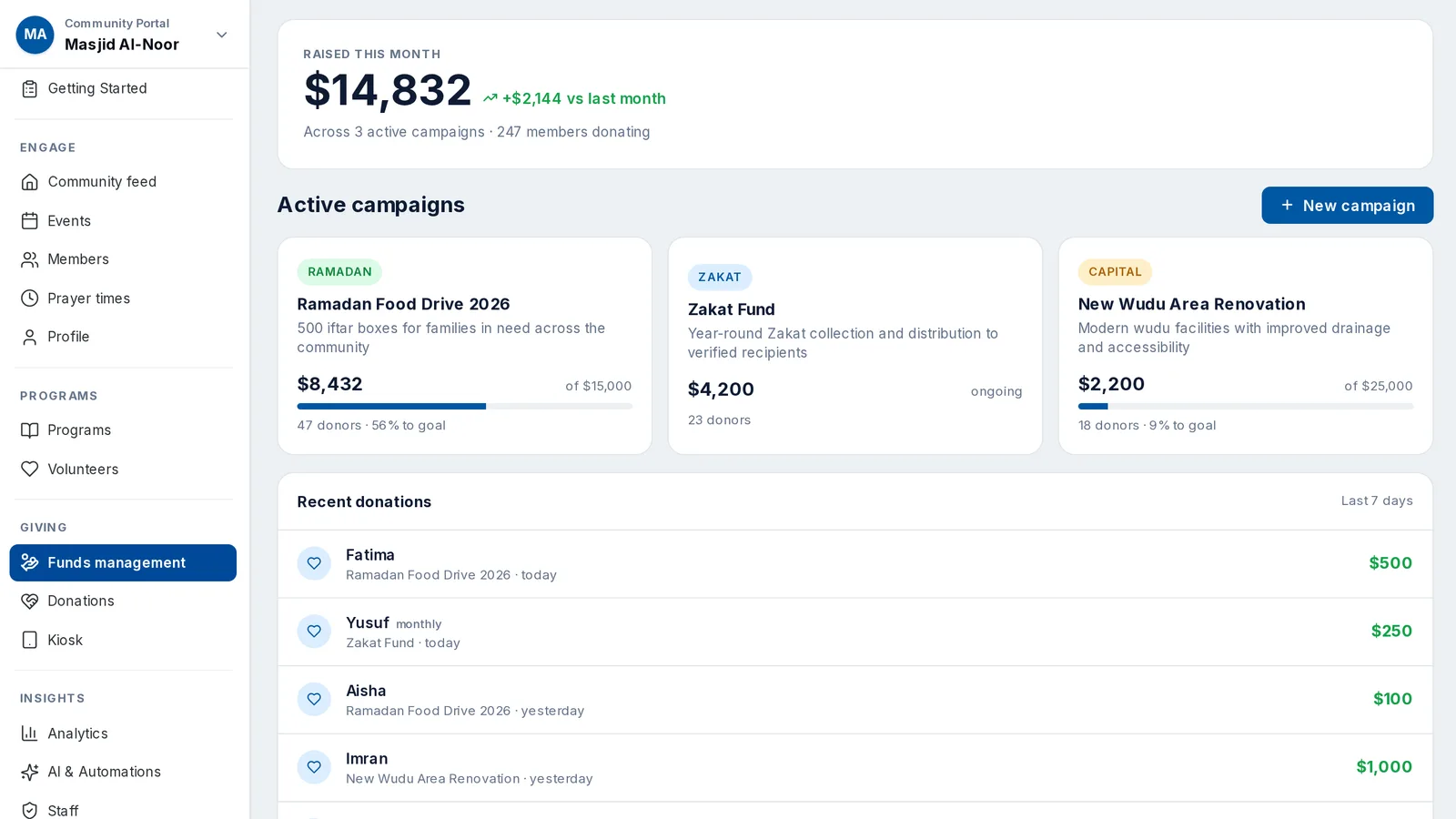
Organize your various waqf endowments, whether they are cash waqf or dedicated property, within a clear and accessible dashboard. Understand the purpose and status of each fund at a glance.
- Set up dedicated waqf funds with specific goals
- Track contributions and distributions for each waqf
- Monitor the growth and impact of your waqf investments
Steward Donor Trust with Clear Reporting
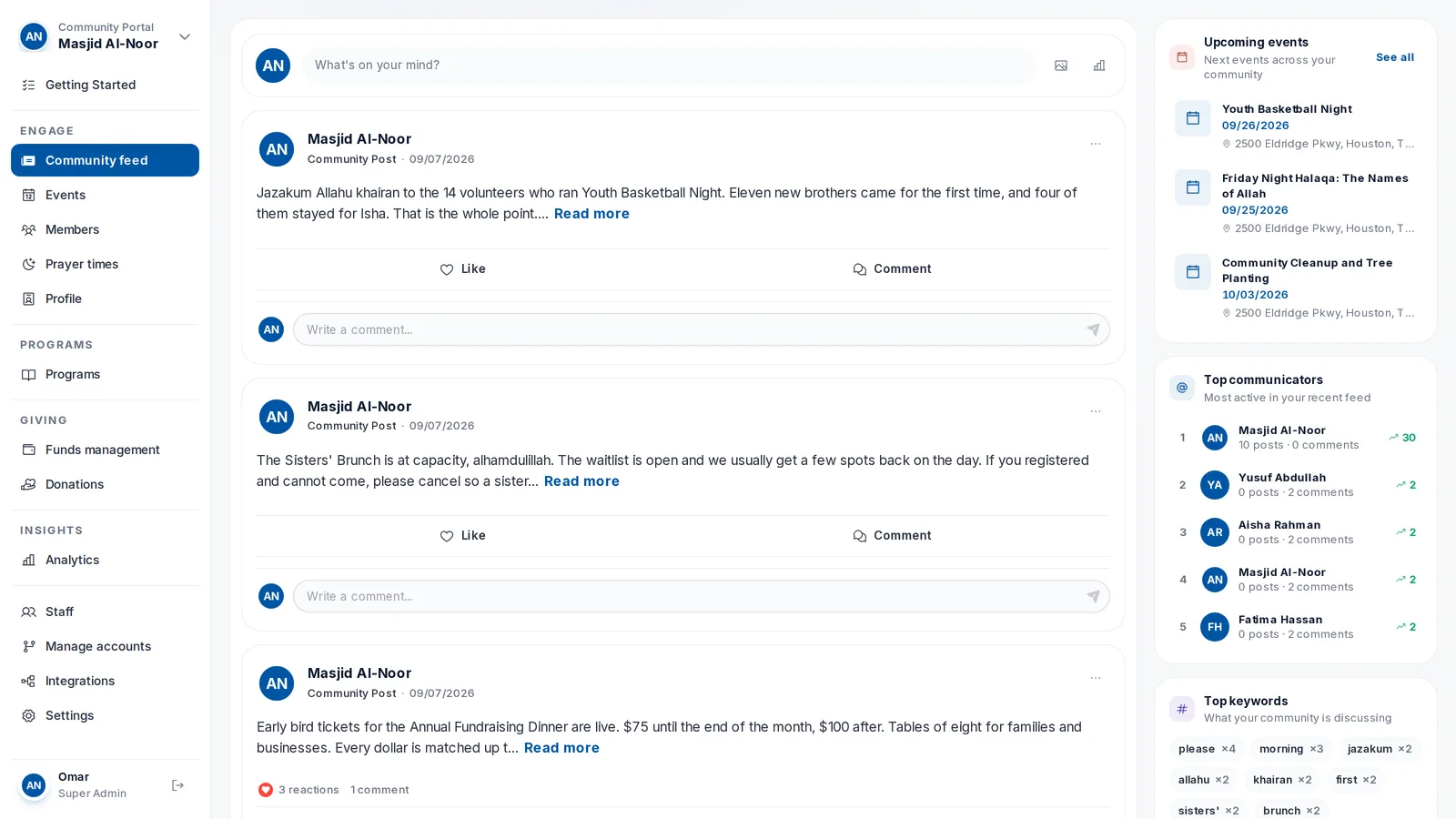
Maintain the amanah of waqf by providing transparent updates to your donors and beneficiaries. Our platform helps you communicate the impact of their contributions and the progress of the waqf.
- Manage a database of waqf donors and beneficiaries
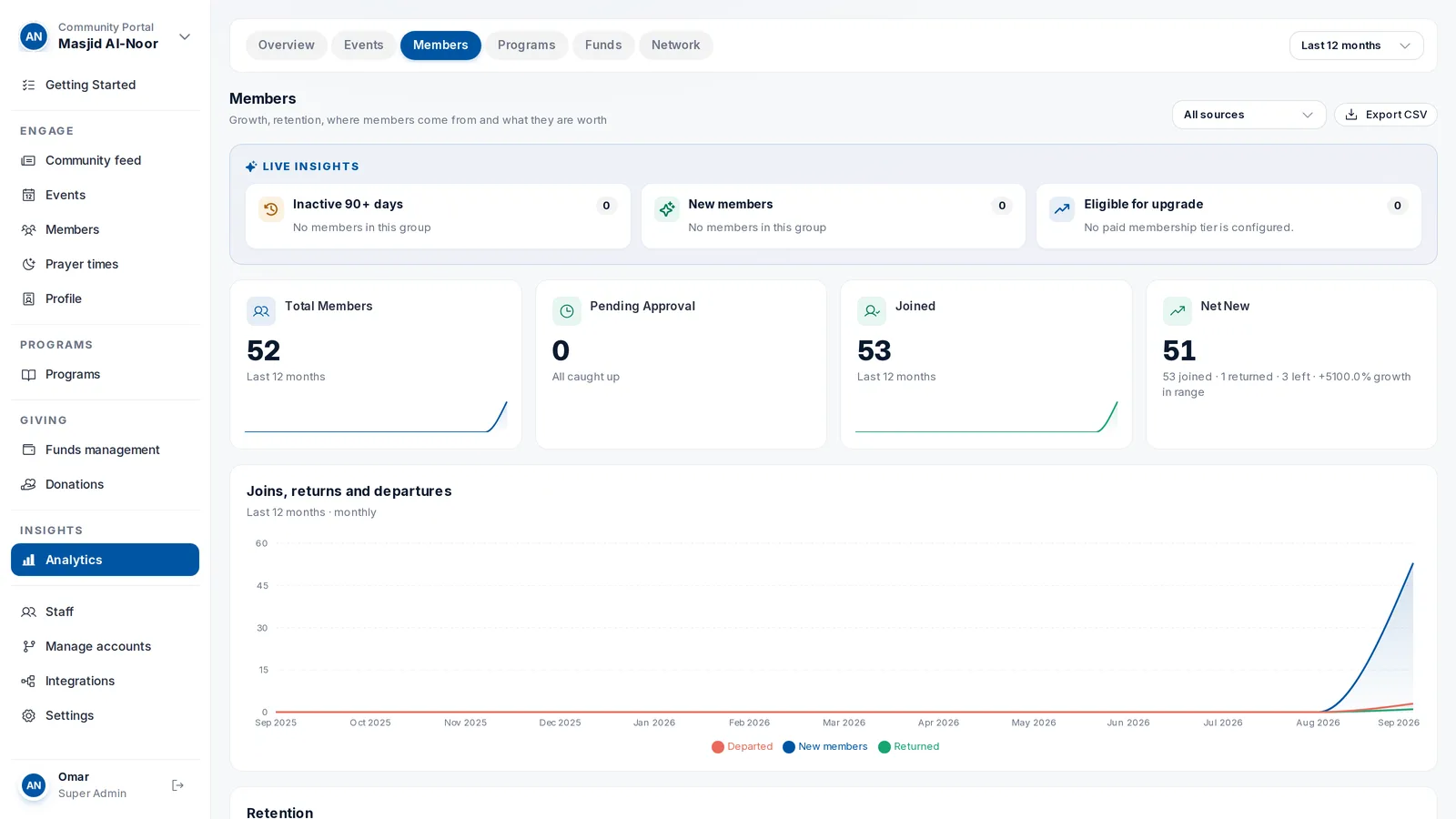
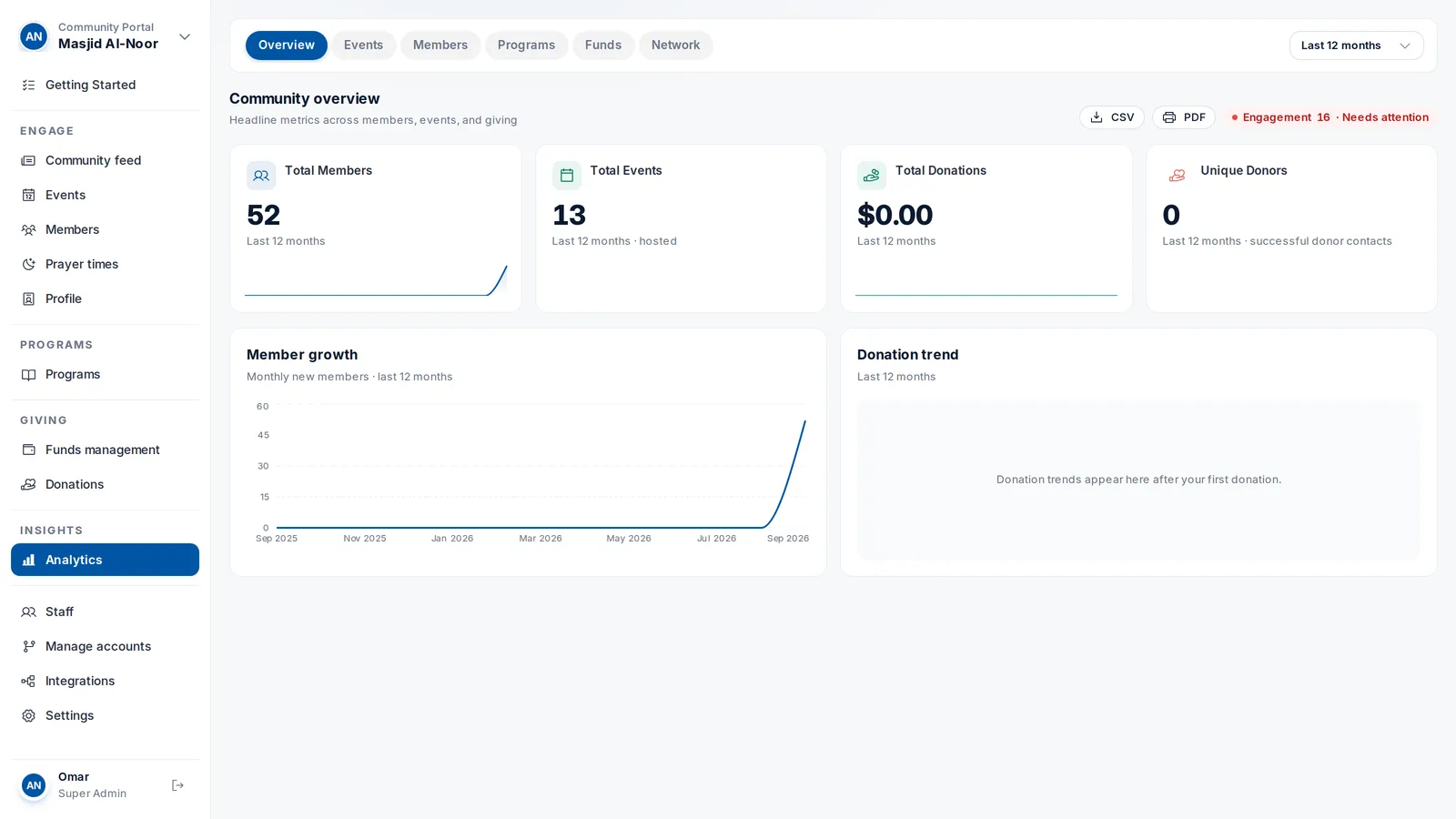
- Generate reports on waqf fund activity and usage
- Communicate directly with stakeholders about waqf impact
Ensure Waqf Integrity and Accountability
From understanding the types of waqf to managing their specific conditions, Ummah provides the tools to uphold the integrity of your waqf. Simplify reporting for your board and community.
- Document specific waqf conditions and stipulations
- Maintain a clear audit trail for all waqf transactions
- Generate comprehensive reports for governance and transparency
How Ummah works
Get your community running on Ummah in under an hour.
- Set Up Your Waqf Funds
- Collect & Track Contributions
- Monitor & Report Impact
See how 3,000+ communities run on Ummah
Drop your email, we'll send a 2-minute walkthrough and a one-page setup checklist tailored to your community.
No spam. We send one email and follow up only if you reply.
Steward Your Waqf Investment with Confidence
Give your community the lasting legacy it deserves, with clear management and full transparency.