

Halal Food Festival: Find One or Run Your Own
When and where halal food festivals happen, what to expect at the stalls, how to find one in your city, and how a masjid or community runs one with Ummah.
What these festivals are
A halal food festival is a market where every stall sells halal food, usually from a few dozen local restaurants, home cooks and small businesses. Most are organized by a masjid, a Muslim students' association or a community nonprofit, and the busiest draw families from across the metro for an afternoon or an evening.
They cluster around a few times of year: Ramadan nights after taraweeh, the days around each Eid, and summer weekends when a parking lot or a park can hold the crowd. Winter editions move into convention halls and school gyms.
Expect long lines at the best-known stalls, a kids' area, a few stalls selling clothes, books and perfume beside the food, and a prayer space with salah announced over the speakers. Many festivals are free at the gate and cover costs through booth fees and sponsors. The larger ones sell tickets to manage the crowd.
How to find one in your city
Festivals are announced a few weeks out, mostly through the host masjid, so the fastest way to find one is to follow the communities near you rather than search the web the night before.
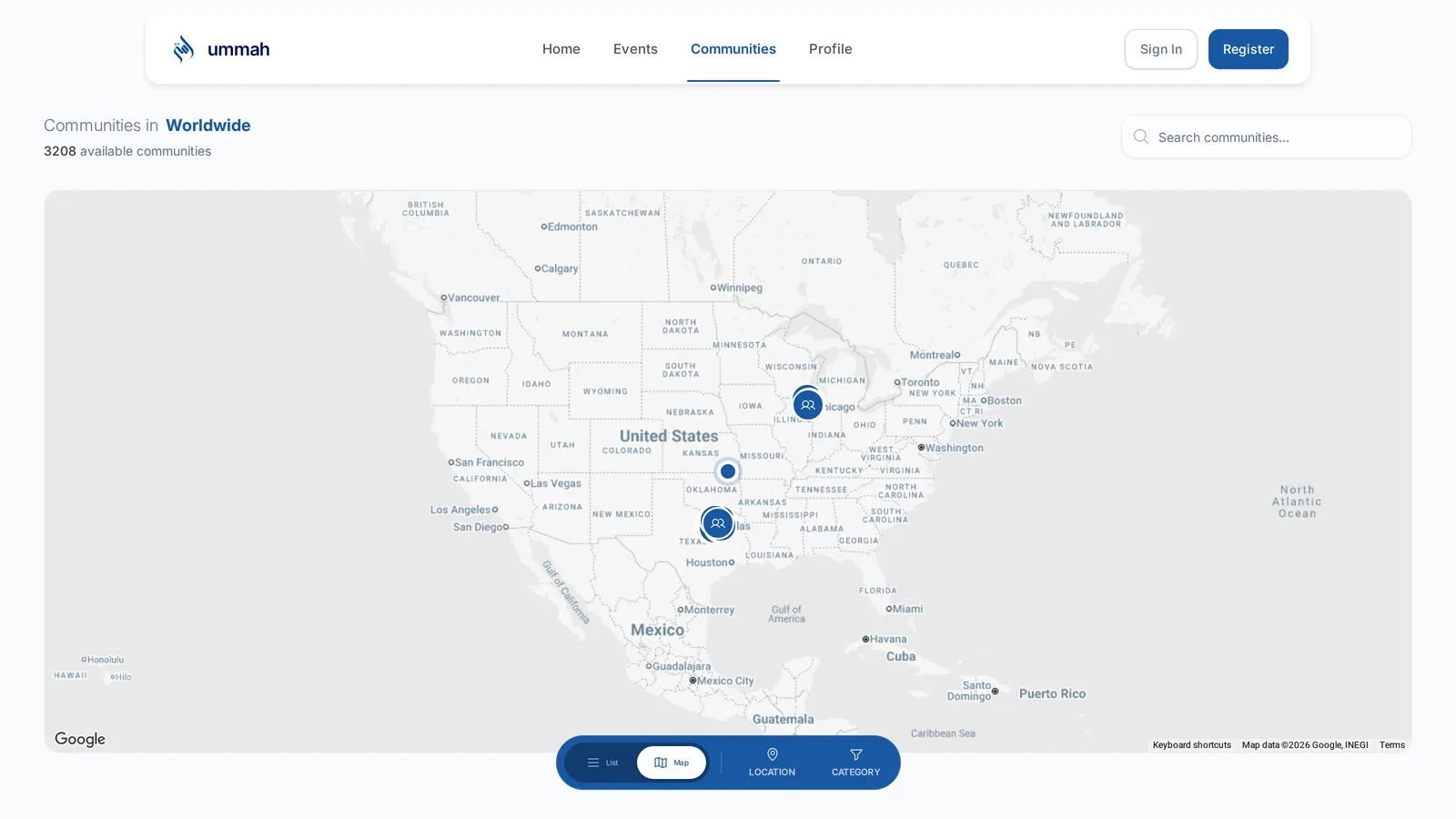
- Open the Ummah app, set your city and browse upcoming events. Communities publish their festivals, bazaars and Eid fairs there.
- Check the city pages on theummah.io, such as /muslim-events-dallas/, for what local communities have published.
- Use the free tool at theummah.io/tools/find-events/ if you do not want to install anything.
- Follow the masajid that ran one last year. Most repeat on a similar date.
How to run a halal food festival
A good festival is mostly logistics done early, in this order.
- Date and venue first: the masjid lot, a park with a permit, or a hall for winter. Confirm parking, power, water and restrooms before anything else.
- Vendors two to three months out: invite restaurants and home cooks, collect a booth fee, and ask for proof of halal sourcing and the food permit your city requires.
- Permits and safety: a temporary food event permit, fire marshal sign-off if there is open flame, and a first-aid table.
- A floor plan with numbered booths, so vendors know where to set up and visitors can find them.
- Volunteers in two-hour shifts for the gate, parking, the kids' area and clean-up, with one lead per area.
Where Ummah fits
Ummah does not run festivals. It is where a community publishes one and keeps the pieces that otherwise live in five spreadsheets.
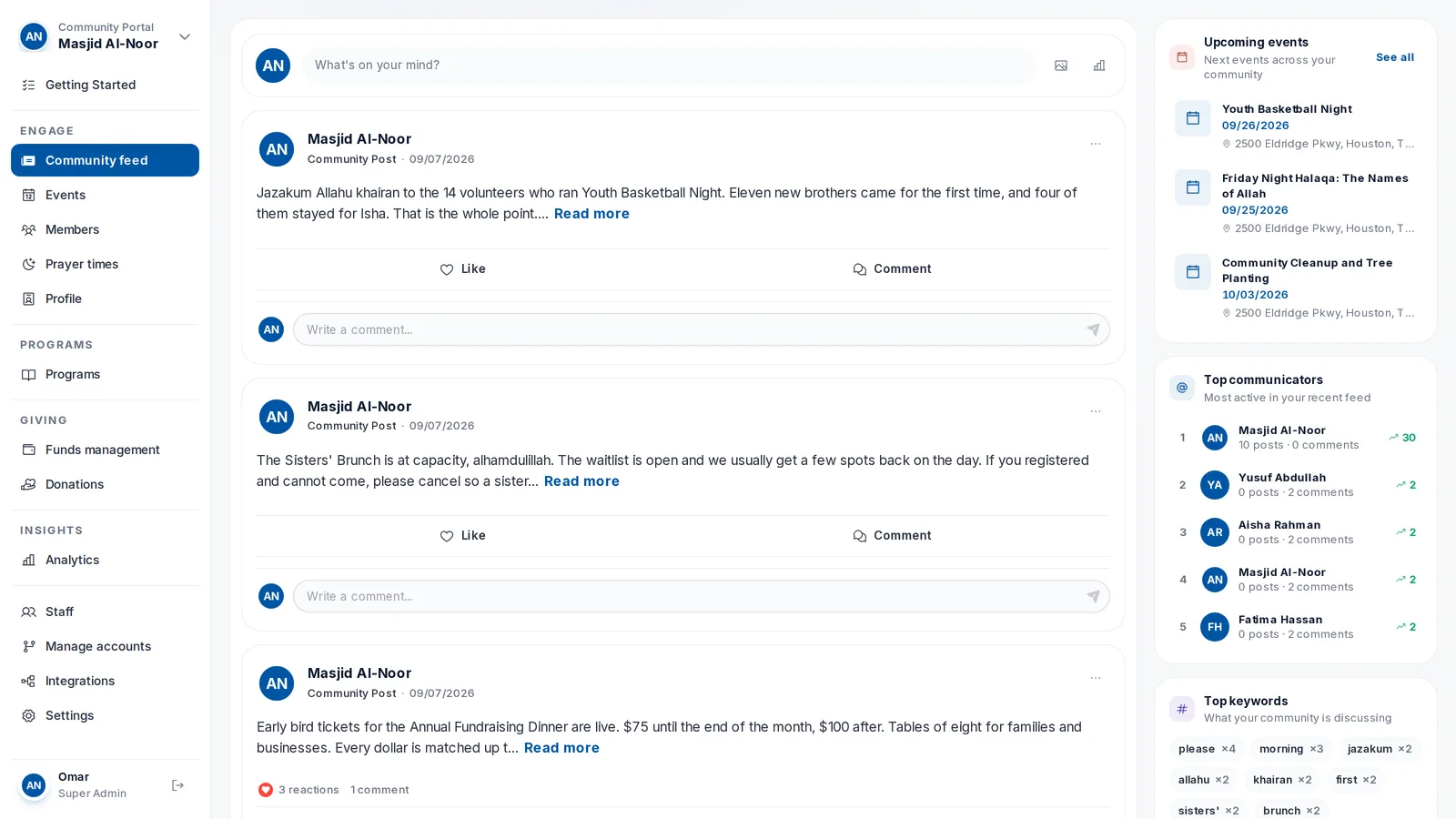
- Free or paid tickets with a waitlist and QR check-in at the gate, on every plan including Free.
- Vendor, sponsor and volunteer lists in the Community Portal, with messages to each group from the same place.
- A free booth map builder at theummah.io/tools/vendor-map/ for the floor plan: numbered booths, landmarks and a print view.
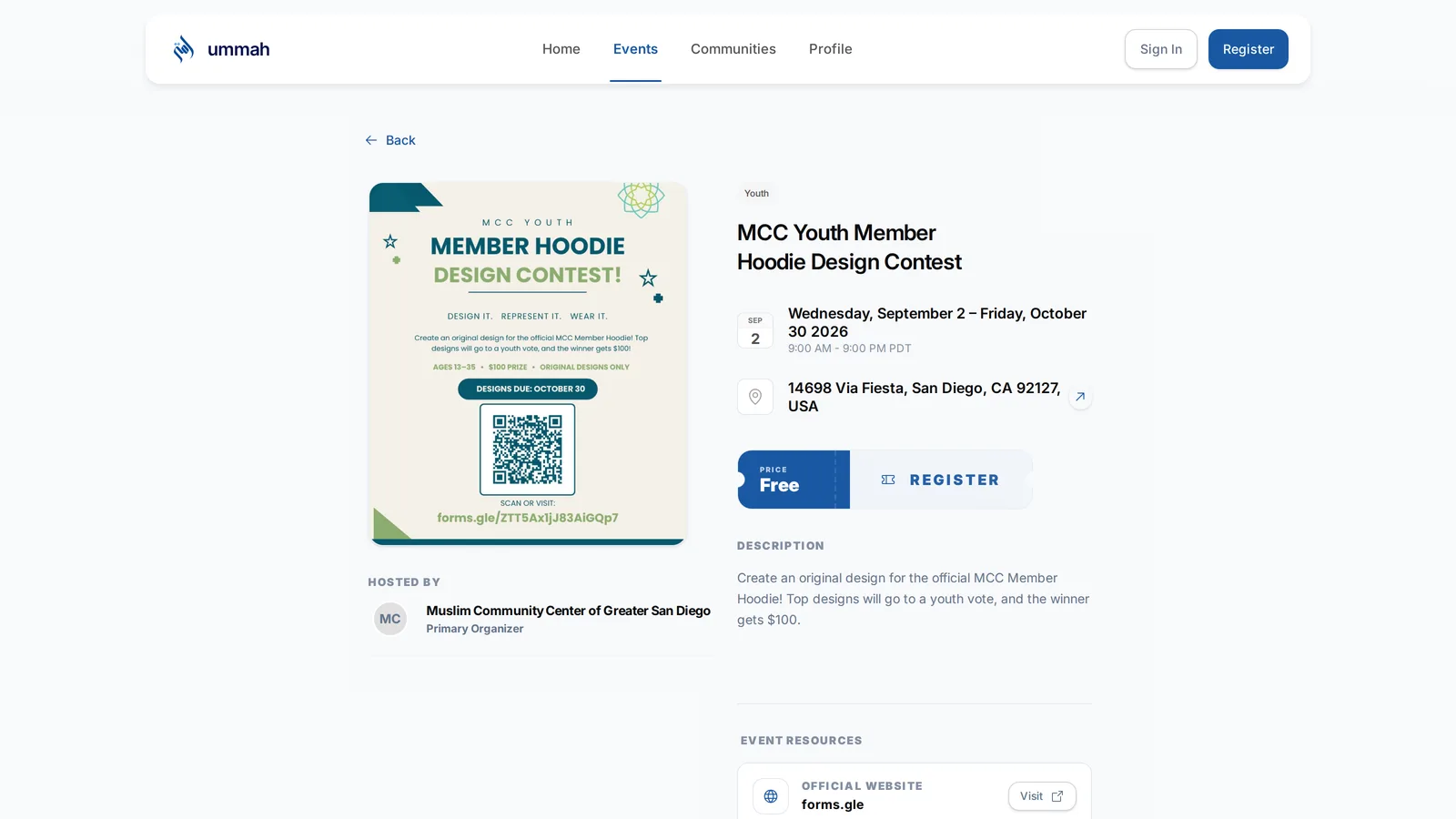
- The event appears on your free Community Page, in the Ummah app and on your city's events page, so the people who follow your masjid see it.
Before you go
Go early for the stalls everyone talks about, or late for shorter lines and discounted leftovers. Bring cash for the smaller vendors and something to sit on if the venue is a field.
If the festival is ticketed, the ticket is usually a QR code on your phone, scanned at the gate. Check the listing for parking and the prayer arrangement before you leave; the host usually publishes both.