

Choosing an Islamic Studies Course
What an Islamic studies course covers, formats from weekly masjid classes to multi-year programs, what they tend to cost, and how to pick one you will finish.
What these courses usually cover
An Islamic studies course is a structured class with a teacher, a syllabus and a fixed run of weeks, as opposed to a drop-in halaqa. Most are built around one subject at a time: aqeedah (belief), fiqh (worship and daily practice, usually in one school of law), seerah (the life of the Prophet, peace be upon him), tafsir (explanation of the Qur'an), hadith, or Arabic to read the sources yourself.
Beginner courses move through all of these in a survey year. Intermediate and advanced courses go deep on one text, often a classical work read with a teacher who studied it the same way. A good course tells you which it is before you register.
The formats you will find
The same subject is taught in very different shapes, and the shape matters more than the title when you are deciding whether you will actually finish.
- Weekly at a masjid: one evening or a weekend morning for eight to sixteen weeks. Free or low cost, local, easy to attend with family.
- Weekend intensives: a visiting teacher covers one subject in two or three full days. Good for a focused topic, less good for retention without follow-up.
- Online: live classes over video with recordings, often from institutes in another country. The widest choice and the easiest to quit.
- Multi-year programs: several semesters toward a diploma or ijazah, part time, usually with exams. The most demanding and the most rewarding.
For institutes: publishing a course on Ummah
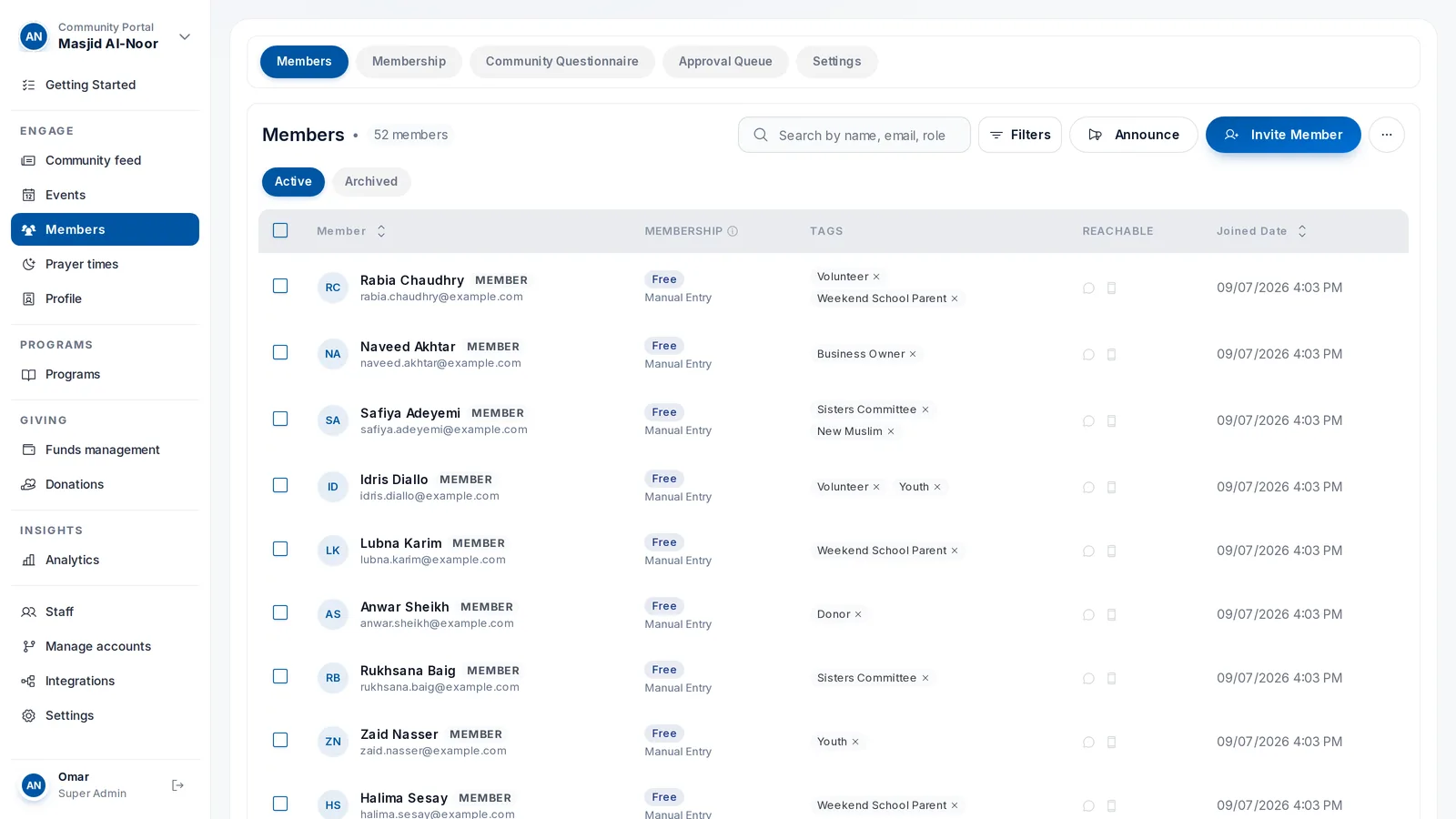
Ummah does not teach courses. It is where a masjid or institute publishes one, takes registrations and keeps the roster, and where students in that city find it.
- A course is a program with a session per class day, a capacity and a registration form you design, so a sixteen-week class is one enrollment rather than sixteen tickets.
- Free or paid registration, with a member price, and a waitlist you can promote from when a seat opens.
- Attendance marked per session, and messages to the enrolled students from the same page.
- The course shows on your free Community Page, in the Ummah app and on your city's events page, next to your other programs.
How to pick one
Start with the teacher, not the brochure. Ask where they studied, who they studied with and whether they teach from a text or from their own notes. Then ask what a graduate can do that they could not do before, such as reading a page of Arabic or explaining the rulings of fasting.
Then be honest about your week. A course you can attend in person near home, with people you will see again, beats a more impressive one you will drop in month two. Ask whether classes are recorded, and whether there is a sisters' section or childcare if that decides it for you.
What it tends to cost
Weekly masjid classes are usually free or ask for a donation toward the room and the teacher's time. Weekend intensives charge a flat fee, sometimes with a discount for students and couples. Online institutes charge per course or per term, and multi-year programs charge by semester, closer to a community college class than a university one.
Most institutes will reduce or waive fees if you ask quietly. The fee is there so people turn up, not to keep anyone out.
Finding a course in your city
Courses are announced a few weeks before a term, mostly by the masjid or institute hosting them. The Ummah app lists the programs and classes communities near you have published, and the web directory at theummah.io covers 3,000+ masajid and Muslim organizations by metro.
If a course is not listed anywhere, call the masjid office. Many small weekly classes still exist only on a flyer by the shoe rack.