

Islamic Center Near Me: Find Yours and Know What to Expect
What an Islamic center offers beyond the five prayers, how a masjid differs from a center, what a first visit is like, and how to find the one closest to you.
What an Islamic center is, and what it offers
People search for islamic center near me for different reasons: a place for Jumu'ah, a weekend school for the children, a new Muslim looking for a first conversation, or a family that just moved and wants to know where everyone goes. Most Islamic centers in the United States serve all of those at once.
The name is not a technical term. A masjid is a place of prayer; an Islamic center is usually a masjid plus everything around it: classrooms, a hall, offices, sometimes a gym or a clinic. Many communities use both words for the same building. What matters is what the place offers and when its doors are open.
What most Islamic centers offer
Centers vary with the size of their community, but these are the services you can usually count on.
- The five daily prayers in congregation and Jumu'ah on Friday, with iqama times posted at the door and, increasingly, online.
- Weekend school for children, Qur'an classes for all ages, and a weekly halaqa or tafsir class for adults.
- Life services: nikah, janazah and burial arrangements, counseling, and help for new Muslims learning to pray.
- Community care: a food pantry or zakat fund, Ramadan iftars, Eid prayers and fairs, youth and sports programs.
- A hall you can book for a wedding, an aqiqah or a community dinner.
How to find the Islamic centers around you
Most large metros have more of them than you expect, and the closest is not always the one that fits.
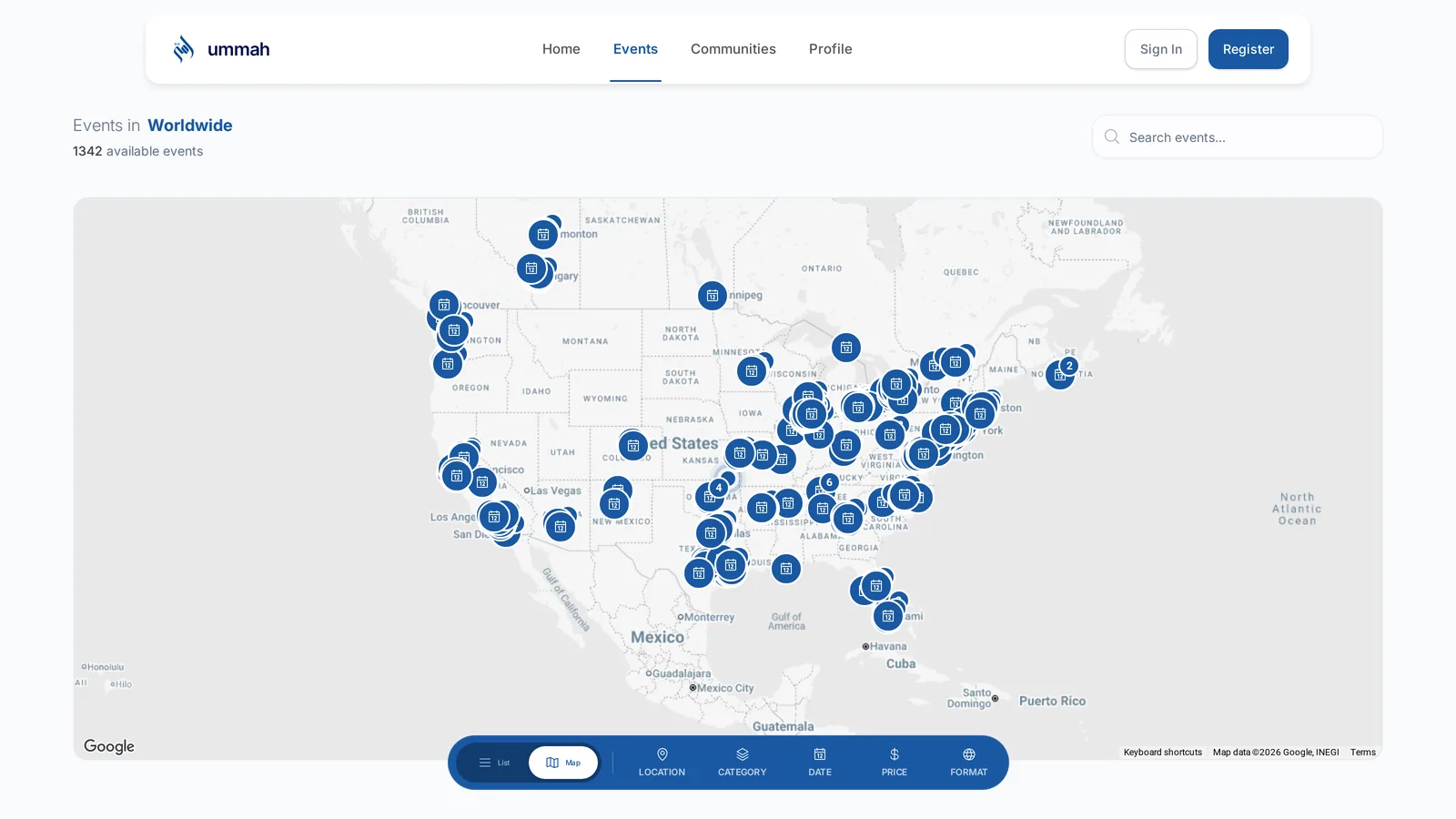
- Search the Ummah directory at theummah.io/tools/find-a-masjid/ by metro. It lists 3,000+ masajid, Islamic centers, MSAs and Muslim organizations with prayer times where they publish them.
- Open the Ummah app and look at the map. Each center's Community Page shows its prayer times, this week's events and a way to follow it.
- Go to Jumu'ah at two or three. Fifteen minutes after the prayer tells you more about a community than any website.
- Ask about language and size. Some centers give the khutbah in Arabic, Urdu or Somali with an English summary; some have 200 people on Friday, some 2,000.
For Islamic centers: be findable by the people looking for you
Every week someone in your area searches for a center and finds a Facebook page from 2019. A current page is the cheapest outreach there is.
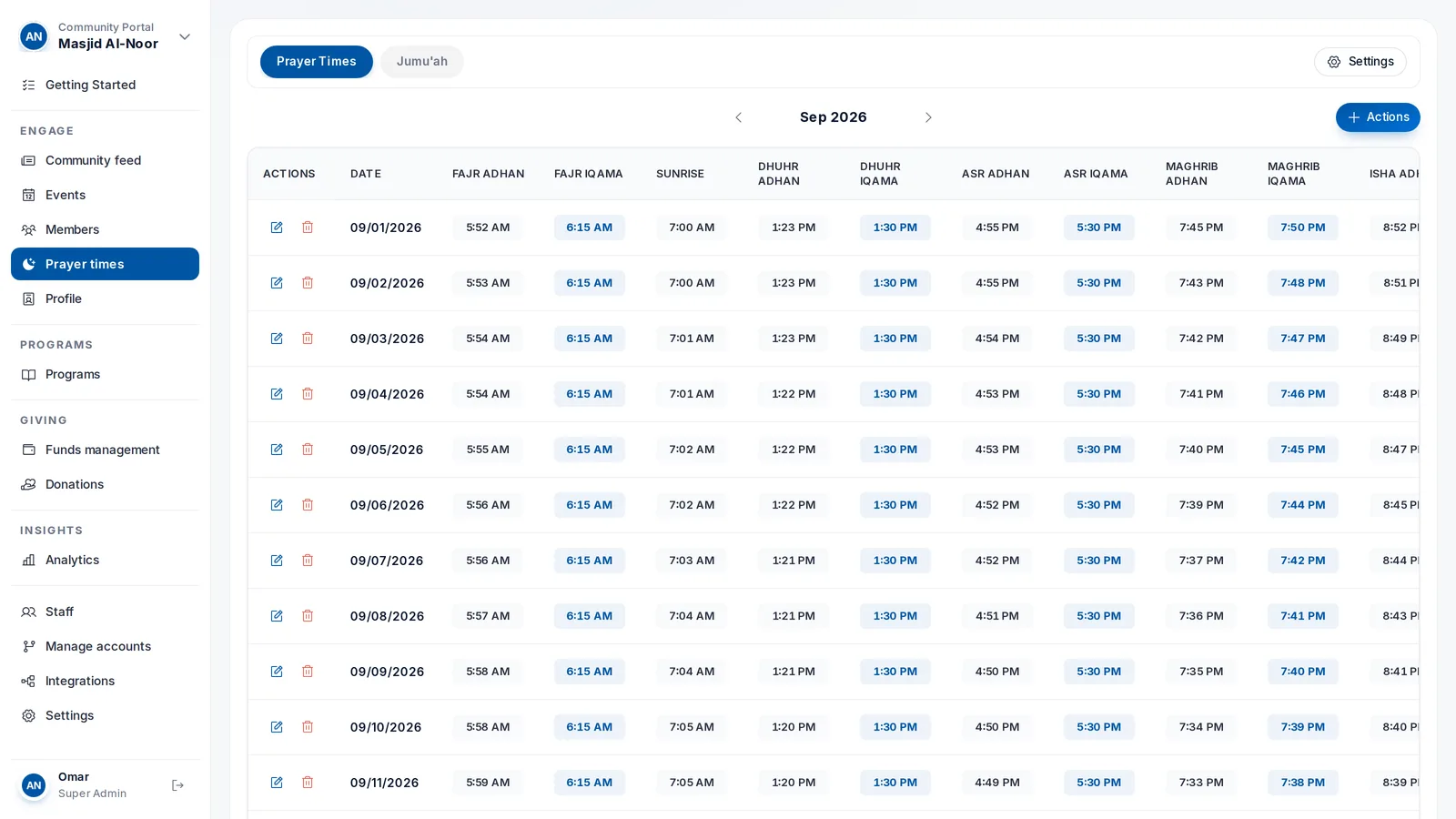
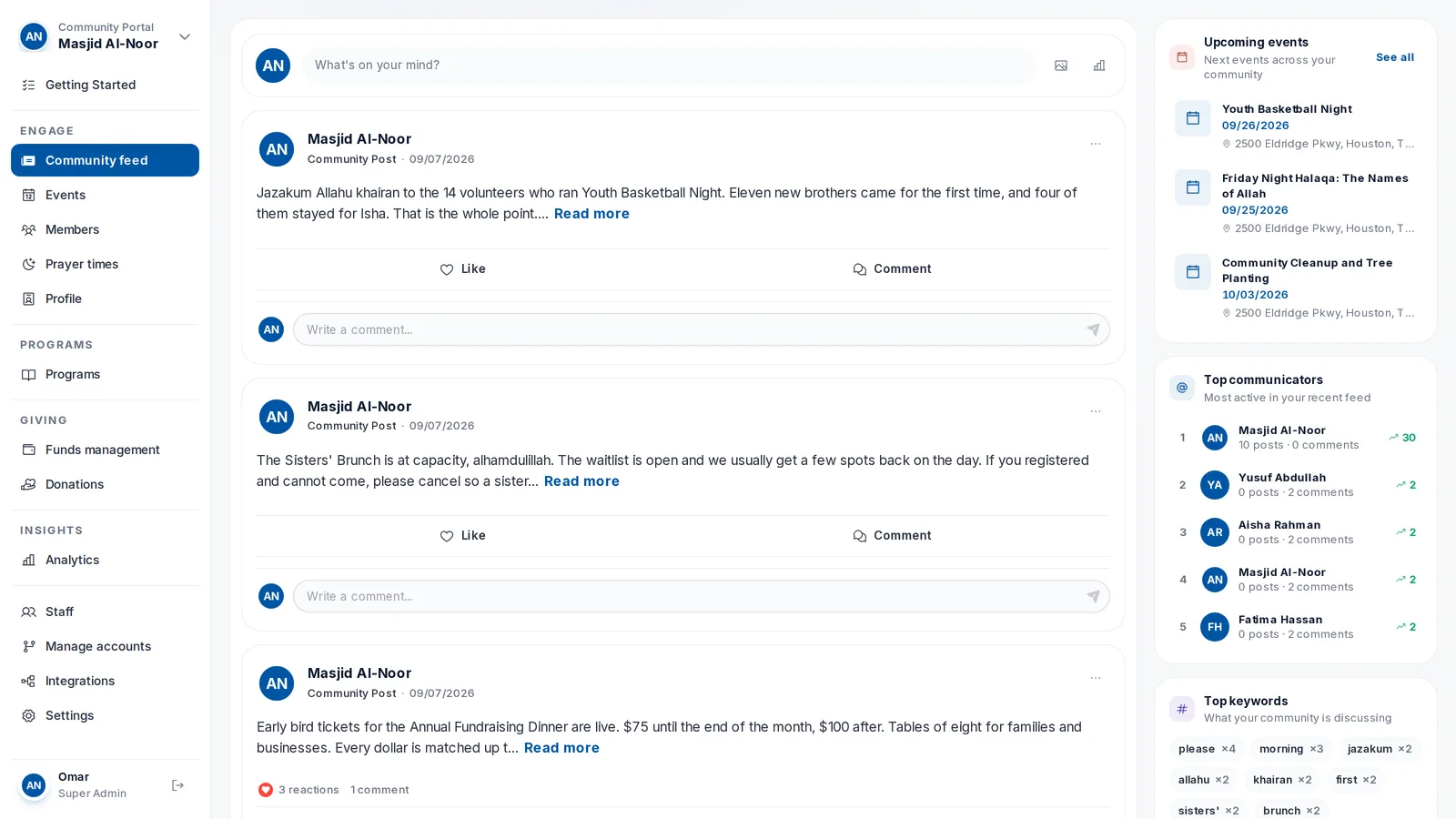
- Claim or create your free Community Page on Ummah. Add prayer and iqama times, Jumu'ah, the address and your programs.
- List weekend-school enrollment, halaqas, iftars and the Eid prayer as events. They show in the app, on your public page and on the Muslim events page for your city.
- Put the free prayer-times widget on your own website so the two never disagree.
- Note what newcomers ask about: parking, the women's area, wheelchair access, a children's room.
Your first visit
Dress modestly, take your shoes off at the door, and make wudu in the bathrooms if you have not at home. Men and women usually pray in separate areas; signs or the people at the door will point you to the right entrance. Nobody expects you to know the building.
The best first visit is Jumu'ah or a community dinner, when there are people to talk to. Introduce yourself to the person next to you and say you are new. Someone will take it from there.
Which one is yours?
Most families end up with two: the center closest to home for daily prayers and the children's school, and a larger one across town for Eid, lectures and events. Neither is wrong. Follow both on Ummah and everything each one announces lands in one feed.
If you are a new Muslim or returning after years away, choose the center where someone made the effort to greet you. The programs matter less than the people, and the people matter most in the first month.