

Iftar Near Me: Finding a Community Iftar This Ramadan
Masajid host community iftars nightly or weekly through Ramadan, most of them free. How to find one tonight, what to bring, and how a host publishes one.
Where community iftars happen
Where is an iftar near me tonight? Through Ramadan the answer is almost always a masjid. Most masajid serve a community iftar at least once a week, and many serve one every night, paid for by families who sponsor a day. Students' associations, community centers and some Muslim-owned restaurants add their own, and the last ten nights are the busiest.
Most are free and open to anyone who walks in, Muslim or not. A few large dinners, usually interfaith events or fundraisers, sell tickets so the host can plan the catering. The listing will say which, and when it does not, assume free and bring something to share.
How to find one tonight
Iftar time moves by a minute or two each day and the hosts change by the night, so the useful sources are the ones the masajid update themselves.
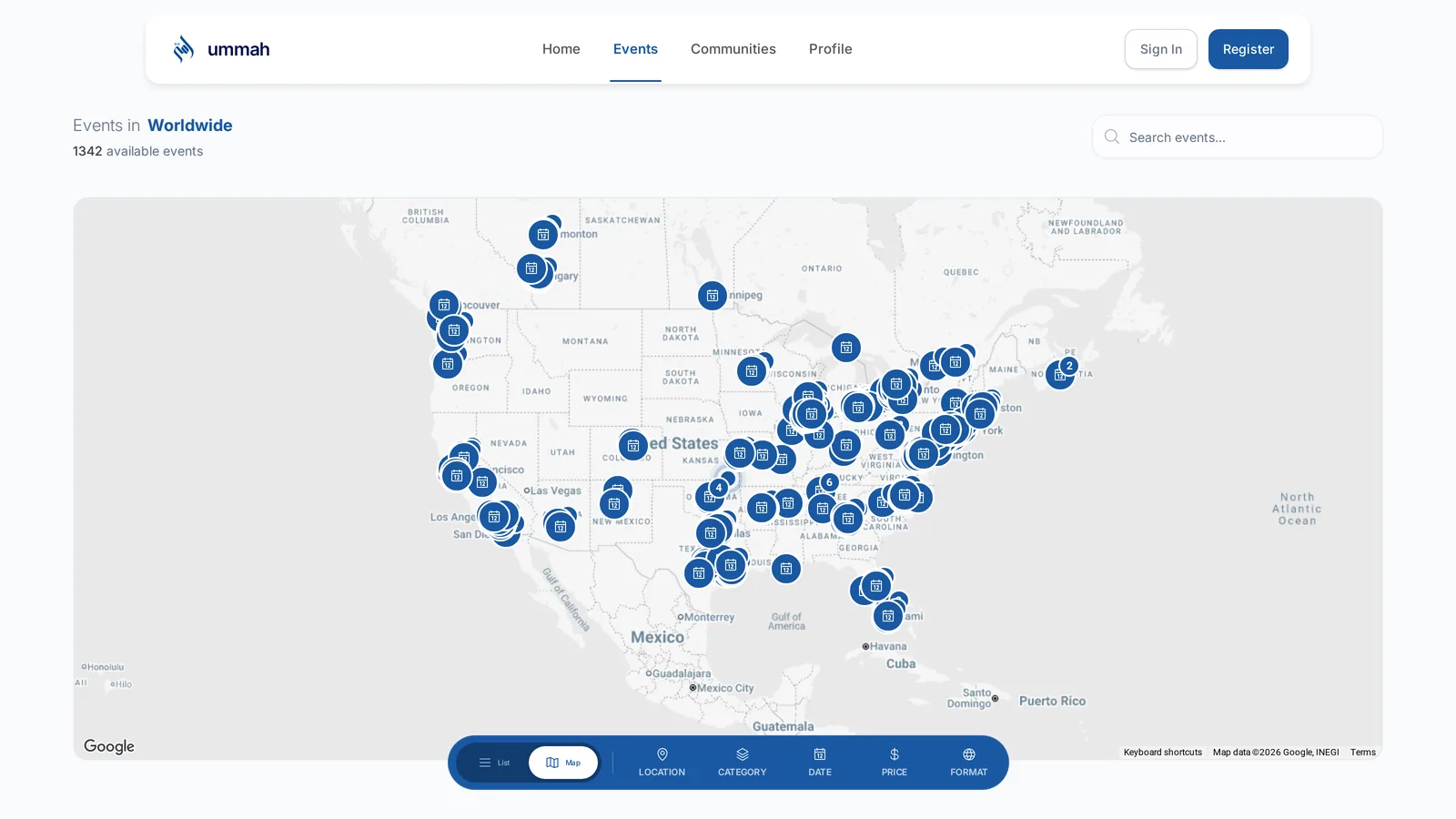
- The Ummah app lists the iftars and Ramadan programs communities near you have published, and shows each masjid's prayer times, so you know when Maghrib is at that venue.
- City pages on theummah.io, such as /muslim-events-dallas/, and the free tool at theummah.io/tools/find-events/ show the same events on the web, no account needed.
- The masjid's own page in the Ummah directory: 3,000+ masajid and organizations are listed by metro, with address and prayer times.
- Call or walk in. Any masjid with taraweeh will tell you which nights have food and whether you need to sign up.
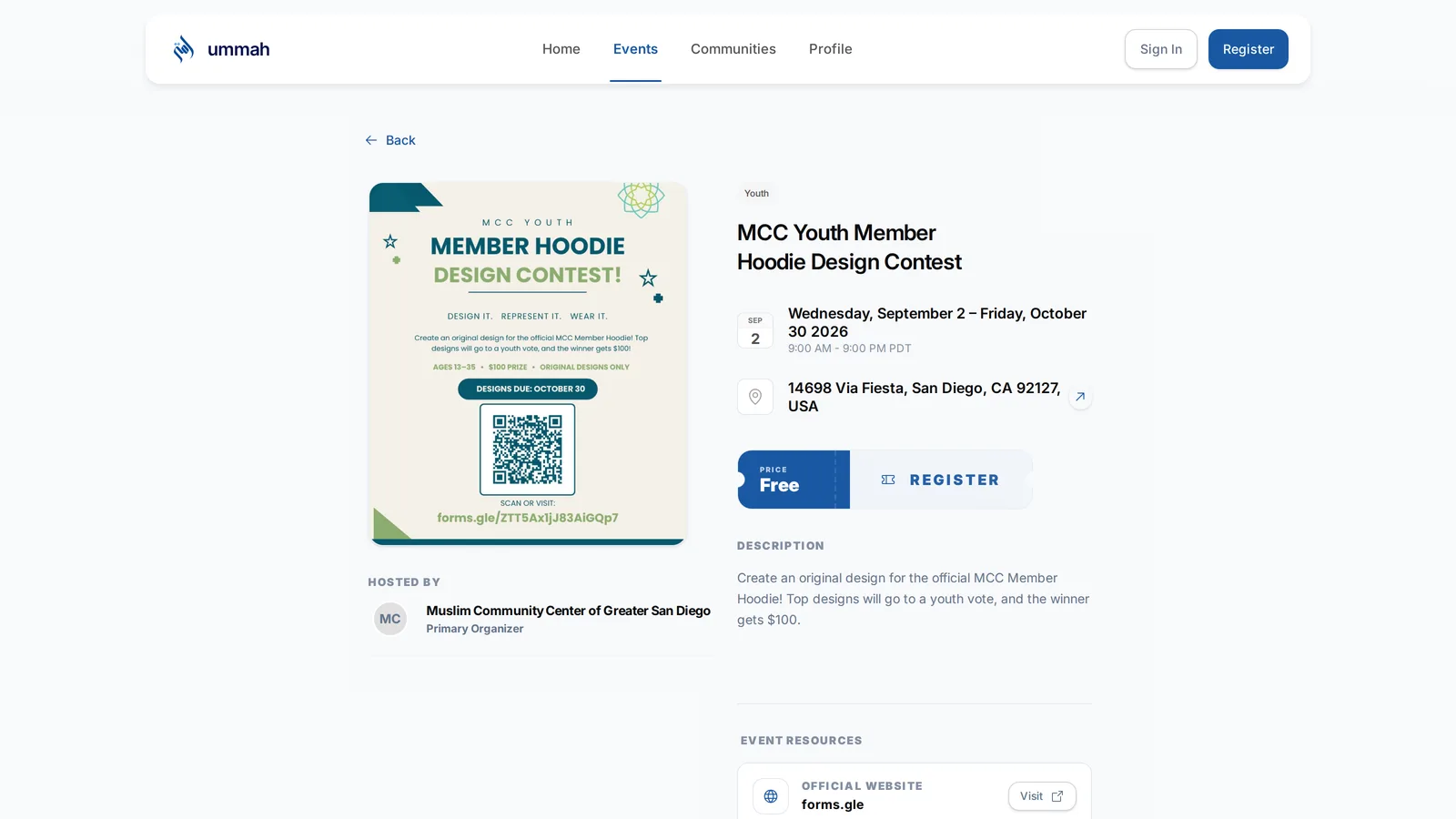
For hosts: publishing an iftar people can find
Ummah does not host iftars. It is where a masjid or community publishes one so the people searching that afternoon can find it, and where the sign-ups and the volunteer list live.
- Publish it as an event on your free Community Page with the night, the address and whether sign-up is needed. It shows in the app and on your city's events page the same day.
- Set a capacity and a free RSVP when the kitchen needs a count, with a waitlist that fills seats as people drop out, and QR check-in at the door for ticketed dinners.
- Make it a recurring event for a nightly iftar, so one listing covers the month instead of a new post every evening.
- Keep volunteers and sponsors in the portal, and tell everyone who RSVP'd about a change of hall or a cancelled night from the event itself, by email and push.
Etiquette, and what to bring
Arrive fifteen minutes before Maghrib, not at it. Most masajid break the fast with dates and water, pray Maghrib, then serve the meal, so the real wait is short. Sit where the volunteers point you. The men's and women's halls are usually separate, and the family section fills first.
You do not need to bring anything, but a box of dates or a tray of fruit is always welcome, and staying ten minutes to stack chairs is worth more than either. If you are coming with a group of more than five, tell the host a day ahead so the kitchen can count you.
Iftar at a restaurant, or at home
Some halal restaurants run a set iftar menu through Ramadan and take bookings, and in a few neighborhoods the local businesses sponsor a street iftar. What you see on Ummah comes from masajid, students' groups and nonprofits, so check with the restaurant directly.
Hosting at home is still the most common iftar of all. If you want to open yours to people you do not know, new Muslims or students far from family, ask your masjid to pass your name along rather than publishing your address. Some keep a quiet list for exactly this.